Pages

Showing posts with label Farms. Show all posts

Monday, December 12, 2016

How To Start Fishery Business In Nigeria And Make Lots Of Profit.

First and foremost, making money is less of theory and more of practical, so i have tried my possible best to reduce the amount of grammar in explaining this topic to the barest minimum. 

What is fishery all About: fishery is simply a form of business that is all about rearing aquatic organism in an artificial or natural environment, making money from fishery depends on what you choose to do with aquatic organism(fish).
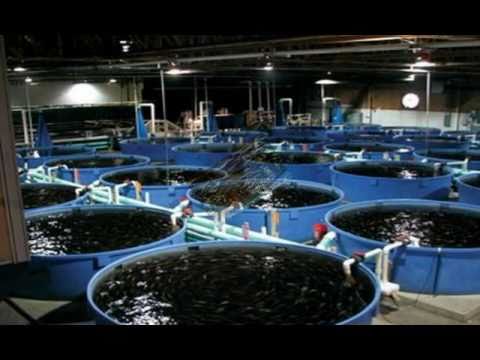
Image result for Fishery Business

Forms of Business Under Fishery

  1. Construction of fish ponds
  2. Fingerlings production
  3. Juvenile Production
  4. Rearing fish to market size
  5. Fish processing & smoking
  6. Construction of fish aquarium
  7. Fish feed sale and production
  8. Teaching people the business
Construction of fish ponds:You can earn yourself a living constructing ponds of various sizes for individuals and organizations. constructing a pond is as easy as just digging a hole, just that you need to abide to various guidelines. Fish can also be raised in plastics, fiber strands and wooden rafts. There are two main types of Pond. This can either be earthen pond or concrete pond. To make money under pond construction you need to be able to build standard pond size for people. A standard pond size cost about ₦40,000.

GUIDELINES TO BE CONSIDERED WHEN SETTING UP A POND

1. Market: There should be a fish market near-by to allow for high capacity of sale of fish from pond harvests.
2. Nature of the soil: Soil with enough clay content to hold water. Clay and silty clay's are excellent soils for holding water because they stop water from seeping through.
3. Topography: Topography that allows for economical construction. It directly affects building costs and pond management. Pond should be constructed where enough water can be impounded with the least amount of earth fill.
4. Water availability and quality: water could be obtained from boreholes, streams or lakes. Gravity flow water is cheapest and best source. The water must be unpolluted, uncontaminated. Borehole waters can be excellent, but may be costly to pump and may require conditioning to remove carbon dioxide and improve oxygen content and temperature levels.
Fingerlings production: Making huge some of money under fingerling production depends on whether you own the hatchery or you pay people to hatch for you in their hatcheries. Fingerlings cost about ₦10 to ₦15 each. Based on market survey i will tell you, if you based your fish farming biz on production of fingerlings, using good brooding stock (male and female) and you are notable for viable fingerlings, you have a large customer based to supply no matter your region, and you can earn your self a descent income of ₦250,000 to ₦300,000.

The Requirements for a fingerling business

  • Pond or plastic water container
  • Personal or rented Hatchery
  • Notify potential fish farmers in your area.


juvee

Juvenile business: This perhaps the easiest to setup, with little or no capital you can get this form of fish business uprunning, and start bagging cash into your bank account. A fully grown juvenile cost about ₦20 to ₦35. What you simply do under juvenile business is to:
  • Hatch or buy fingerlings at ₦5 each
  • Buy wooden or water container
  • Buy local or coppens foreign feed
  • Put your fingerlings in your water container
  • Feed them daily
  • Change the water every 3 days
  • Sell them at ₦30 each after 6-8 weeks.
      juv
The profit margin here is around 300%, the only issue is water supply.

Rearing fish to market size: This probably the easiest part of fishery business, You only need to have a suitable pond size and stock it with a proportionate amount of fingerlings/juveniles, then you continue the feeding (with local or foreign feed) for probably 5 month till they will arose maturity. The only issue with this form of fishery business is that it’s capital intensive due to the feeding cost. if you can probably take care of the feeding cost, then i think nothing should stop you from starting this business as soon as possible. The profitable fishes you can rear in Nigeria are tilapia and catfish, a mature catfish sells for ₦550 while tillapia sells for ₦400. I will say it’s more advisable to start with catfish rearing because the market is readily available.

fishing           fishingg

Fish processing & smoking: This also a very simple form of fishery business, fish smoking & processing does not necessary mean fish smoking, it’s the process of drying fish in a kiln so as to reduce the moisture content to a very minimal rate, so as to preserve the fish for a very long period of time(3-9 months). The only material you need for this business is a a metal or clay kiln, a kiln is a structure made specifically for drying food. a kiln ranges from ₦30,000 to ₦300,000 depending on the size you need. To make money from this form of fishery business you just need to rear or buy fishes of varying sizes, dry it in a unique way(by adding your own spices) and insert it in a good package/container, then sell to schools, banks and organizations who are the major customer based for such dried products, since they don’t have much time to go to market.

fish proces          KILN 

Construction of fish aquarium: Aquariam construction is a new form of fishery business which only few individuals are already cashing money from. Making money building aquarium is easy, the only issues is the construction experience, you need to be able to build aquariums using your own unique sense of design, then sell to organizations like banks, hotels, schools etc. Imagine a bank with a lot of daily customers having an aquarium in the bank vicinity, most customers will definitely be amazed, and they wont bother about the long queue to the counter.

aquar       aquarium

Requirements for Aquarium Construction

  • Glass of varying thickness
  • Standard quality big size glass super glue
  • Pipe fittings
  • Paper decorations
  • Toys

Fish feed sale and production: I will say this can be an easy and a very difficult form of fishery business at thesame time, the issue about this business is that it’s 99.95 % practical and 0.05% theory. it’s a very profitable business because most fish farmers are always looking for ways to reduce the fish feeding cost and still increase the flesh productivity of the fish, so if you can provide a good flesh-productive feed at a cheaper price than whats in the market, you are destined to be successful in this business.

fish feed          fisfeed

Teaching people the business: At first i felt that there was no need to explain this form of the fishery business, because “no matter how much you are given, if you have a wrong metal attitude, you will never succeed and no matter how little you are given, if you have a right metal attitude you will succeed”

To make money under this forms of fishery business you need to create classes to teach people about this business, in fact you don’t even need to know all about the business, you can higher people to take the classes, but its more advisable to have proves and testimonies about what you are teaching, Cause there is no point mentoring people on what you don’t practice.

Conclusion

This post have been exclusively written for you by “Binoosmart” It’s now your turn to take action. For you to be very successful in this business, You need to also learn from people already in the business.
Read More »

How To Start Small Scale Poultry Farm

There are so many questions people ask on how to start a small scale poultry farm business. If you are wondering how? then you are not alone. This article would give you an insight on how to start the business and how you can grow it successfully.
Image result for poultry farming

Poultry is a very viable and lucrative business. It can be a risky business suddenly, especially when you are not concerned about poultry feed management. Poultry birds require energy. In order to obtain desire growth rate, you must have to purchase and provide highly nutritious poultry feed. It is an established business, so all types of necessary facilities are available.

Steps To Take When Starting A Poultry Farm.

Select Your Poultry Niche

Poultry industry is a very broad niche with different aspects. Below are niches in the poultry business;

Egg productions (Layers breeding)

Meat production (Broilers breeding)

Chicken breeding (Hatchery)

Poultry feed production

Poultry equipment and manufacturing

Egg and meat processing, packaging and marketing

Poultry farming and consultancy
This is to tell you poultry farming has a very broad branch. Therefore, you have to choose your area of specialization. Of course, if you have the money and the technical know how of the business you can do all, but it is better to find out which aspect is more profitable in your area in terms of demand and income.

Capital Requirement

A small scale poultry that is set up on a piece of land behind your house may require a capital of
₦25,000-₦200,000 to start with.

Farm Location

The major thing to acquire before starting a poultry farm is a suitable piece of land. Generally, a plot of 120*60 square meters is suitable for a medium sized poultry farm. The size of land depend on the number of birds you want to raise and the farming system. Acquire the land from far towns and big cities. It’s advisable to buy a land in the rural area. Because lands and labor are highly available in cheaper rate. Select a fresh environment and pollution free area.

Establishing a poultry farm in a rented land is absolutely a bad idea. However, while selecting land, keep in mind some important facilities like great source of water, free from all types of animals and predators, a market near the farm, proper transportation facilities, e.t.c.

Housing

Housing system depends on your poultry breeds and farming method. Below are few tips to use while building suitable houses for your poultry birds.

The poultry house has to be well ventilated. Well ventilation keeps the bird healthy and productive.

Make a suitable system for entrancing sufficient amount of fresh air and light inside the house.

Try and make the house north to south faced.

In the case of making numerous houses, the distance between one house to another house should be about 40 feet.

Before bringing the chick into the farm, clean the house and the entire farm area properly.

Make deep liter clean regularly.

You can use some cheap materials like wooden material or rice ban for making liter.

Keep the feeding and watering equipment in proper distance from each other according to the number of birds and farming system. And always clean all types of equipment everyday.

The house must have all required facilities for poultry birds.
The housing system commonly used in poultry farming are;

Extensive System: range and fold unit

Semi intensive system: Standard semi intensive unit and straw yard

Intensive System: 1. Deep liter, 2. wire and slated floor, 3. battery cage 4. straw yard
Image result for poultry farming

Feeding

Good and high quality of food keeps the birds healthy and highly productive. Good quality fresh and nutritious food is the key success in poultry farming business. It’s advisable to provide adequate amount of food according to the age and number of poultry birds. Along with feeding good food, always supply sufficient amount of clean water according to the daily demands of the birds.

Poultry feeds includes

Wheat: Wheat is one of the best grains to be used as poultry feed ingredients. For this reason you should include a certain amount of wheat in the poultry feed ratio. During the wheat harvesting season, you can feed the poultry birds as mash or as scratch feed. You can also use wheat as a poultry feed throughout the year.

Barley: Generally barley is not as delicious like wheat and oats. But it contains fiber and a great source of fat.

Corn: Corn can be very effective grain for your poultry birds. You can feed whole, cracked or grinded. You can feed ripe corns to your hens.

Millet: It has good advantages as poultry feed. You can use millet in growing, laying and fattening ratio. Millet is easily digestible and help to increase body temperature.

Flax: It is suitable for high amount of protein in your poultry feed. You can use small amount of flax in the feed mixture.

Skim Milk and Butter Milk: They are very useful for all kinds of poultry birds. Especially for the young chicks and laying hens. Skim and butter milk play a vital role to get high quality eggs for hatching. And it’s also reliable source of protein.

By Products Of Grain: By products of grains have a great health value and suitable for feeding the poultry birds. Buy various types of by products if grains are available in the shop where poultry feed are prepared or sold. It’s price is comparably higher than any other poultry feed ingredients.

Fish Oil: Fish oil is a dependable source of vitamin A and D. Main.

Poultry is very sensitive and may be infected by diseases easily. Generally, they suffer various types of viral, bacterial, fungal, nutritional and parasitic diseases. Proper vaccination is a must for keeping your your birds diseases free, healthy and productive. So vaccinate the birds timely. If somehow, disease occurs in the farm, meet a vet doctor as soon as possible and listen to his advice.

Image result for poultry farming

Staffing

Staffing And Man power is not labor intensive if the use of technology is employed. Being a small scale poultry you don’t need so many staff, what you need is a manager and accountant. Either way, your manager can also assume the duty of the accountant too in order to save cost. This individual oversees the day to day running of the business.

What Next…

Please Share
Read More »

Sunday, August 30, 2015

Community Supported Agriculture: Connecting consumers, farms

Community Supported Agriculture: Connecting consumers, farms 
With rural farmers facing the challenge of accessing profitable markets, experts say Community Supported Agriculture (CSA), an arrangement in which members pay for produce upfront at the beginning of the farming season, should be adopted. CSA provides needed fund for farmers and ensures affordable fresh food for consumers, DANIEL ESSIET reports.

Some farmers have started  tapping into the growing demand for fresh produce to make money.
In Lagos and other cities, the increasing demand for fresh produce, such as vegetables, mushrooms, tomatoes, water melon and others, by supermarket chains has increased. For example, farmers in Lagos have been making steady income by supplying outlets such as Shoprite and  Eko  Farmers  Mart.

Spotting a lucrative opportunity, many farmers have agreed to sell their produce using the thriving market platforms. For instance, it is a daily ritual for workers at the Lagos State Secretariat, Alausa, to stroll into Eko  Farmers Marts to buy fresh fruits, eggs and vegetables. Such markets are celebrated for providing fresh produce, such as eggs and fruits.

The Eko Farmers Mart has, undoubtedly, increased farmers  income. Under the arrangement, the  Lagos  Agric  Youth Empowerment Scheme  works with young  farmers to  produce  crops and  poultry  products, which  are  distributed through  the marts.

At a forum, the  Permanent Secretary, Lagos State Ministry of Agriculture, Dr Olajide Basorun, said the markets offer quality, freshness, hygiene and reasonable prices.

He said the government would play a pivotal role in supporting the local industry by assisting farmers to sell their ever-increasing volumes of fresh farm produce.

Across Lagos, Eko  Farmers Marts and supermarket chains  have revolutionised food distribution in the short span. The megastores are popular with customers for their lower prices, choice and convenience.
The marts, according to Basorun, provide added value with healthier food in an environment that fosters social interactions. Producers or farmers keying into the system sell a wide variety of fruits, vegetables and poultry products. The benefits are manyas they provide jobs, generate less waste, bring fresh wholesome food, and connect one to their source.

Through Eko Farmers Marts Basorun said local  producers are  being  integrated  into a food distribution system recognised for its  potential to boost  economic  development  through  agriculture. The  system, he  noted,  has  created  a market channel  for people to  bring fresh  produce  into the city and  new opportunities for families, who live in rural Lagos.

He said the marts, located  in  various  parts of the  state, offer cheap fresh foods to members of their host communities and encourage farmers to increase output.

While these types of markets are on the rise in the cities, the same is not obtained in rural areas. Consequently, many small farmers in rural areas do not have access to such markets unlike their  medium and large growers, with more money and marketing savvy.

For example, farmers outside Lagos struggle to take their produce to the  market. They have to transport the produce to far  places by trucks.  As such, the  produce do not arrive their destinations fresh. They are also of limited variety and are expensive with costs rising between 50 to 100 per cent  in centrally located urban areas.

Its feeble attempts to sell to major supermarkets in the town illustrate how the odds are stacked against small farmers. Those  produce may be sold in small shops and open-air markets, but the value of supermarket purchases  in places  such  as Eko  farmers marts and Shoprite have soared.

Stiff competition from big urban and industrial growers is also real. To supply the supermarkets is a big challenge in terms of requirements.  Even though sales are there in the rural areas, the local markets accounts for less than 10 percent of sales.

For   watchers, local food systems are pillars of rural economic development together with agriculture. The  expansion of cities and their increasing demands should be  paired with the challenges of improving rural livelihoods.

Consequently, there   is a clear need for small scale farmers to find an alternative to formal market that is mainly dominated by big -businesses. One possible solution is the Community Supported Agriculture ( CSA) model.

In CSA, members buy a share at the beginning of the growing season. That provides farmers with up-front capital to grow and manage the farm. In exchange, consumers receive a weekly delivery of fresh, seasonal produce. They also take on the risk of a poor harvest. Ideally, the model builds community and personal connections around food.

Speaking  with  The Nation, The Project Director, Cassava Adding to Africa (CAVA), Prof Kola Adebayo said  CSA refers to an arrangement where consumers purchase a share of a local farm’s harvest prior to the growing season. Sometimes known as subscription farming, CSA is based on an annual market agreement between a farm and local individuals or households. In return for the up-front cash and commitment to the whole growing season, consumers get a weekly variety of farm-fresh produce.

He  said  farmers  in the  rural  areas  will benefit if  they  adopt   CSA  arrangement  with  consumers  within local and  urban  communities. Apart from  having  access  to  markets, they  will  be  able  to  grow the local economies, expand their businesses and get more income for their produce.

Interestingly,  CSA  is a membership farming scheme. Members of the farm communities commit themselves to buying a share of the farm’s harvest for 12-months at a time. This approach allows the farm to invest in the year ahead knowing that it has the support to continue and that the produce will be eaten as they can grow to meet the demand. This system is very beneficial for the farm because it allows the growers to concentrate on what they love, growing food, rather than worry about marketing, processing, branding among others.

As community supported market farms, members, both farmers and consumers feel connected to where their food is coming from and how it is produced.

According to Adebayo, CSA is a relatively new way of farming involving a partnership between food producers and the local community.

CSA, according to him, brings farmers and their customers together to  share responsibility for the land where their food is grown and how their food is produced.  The farmers and consumers participate in marketing system where seasonal produce are sold weekly. The aim is to provide sustainable and growing market for farmers and give customers access to fresh produce with less food miles and at competitive prices.
The system ensures that fresh produce is available year round for producers, their families, and local communities.
Unlike conventional agriculture, where farmers bear the risks of weather, pests, and the marketplace alone, in community supported agriculture the entire community shares the bounty and scarcity.

He said CSA would work  when  farmers  are committed to buying from a producer, or group of producers. A key point is that the consumers are committed to buying on a regular basis and at least, for a whole growing season.

Community supported agriculture is, in fact, a big name for a simple idea. Communities of any size make a financial pledge to support a local farm. This helps them to connect directly with their local farmers and provides benefits for both parties.

The farmer benefits financially from having a secure market of committed customers and the ‘members’ of the CSA often contribute additional labour and a range of skills.

President, Federated FADAMA Community Association, Lagos State, Alhaji Abiodun Oyenekan said strong links to markets for poor rural producers are essential for increasing agricultural production, generating economic growth in rural areas and reducing hunger and poverty.

Oyenekan said better access by small producers to domestic and international markets means that they can reliably sell more produce at higher prices. This, in turn, encourages farmers to invest in their businesses and increase the quantity, quality and diversity of the goods they produce.

To him, belonging to an organised group,  allows small farmers to bulk produce, reduce costs through economies of scale and, perhaps most importantly, to strengthen their bargaining power with powerful private-sector actors.

With increasing challenges of accessing markets,  Oyenekan said  it becomes necessary to support farmers to organise themselves into groups such as cooperatives that give them needed capacity to negotiate for better prices.

He said such cooperatives   improve farmers’ access to markets, increase their earnings, and improve the livelihood and well-being of their families. Apart from addressing the real need in the agriculture value chain of ensuring that farmers have access to necessary inputs to raise their productivity,  they are facilitated to increase their overall earnings from agriculture.

He said cooperatives    enable farmers to work together, reducing competition and making it easier to take care of tasks such as marketing. By combining forces, they can also supply larger users such as restaurants and other businesses, and may be able to hire people to work out the distribution while they focus on farming.
Read More »